
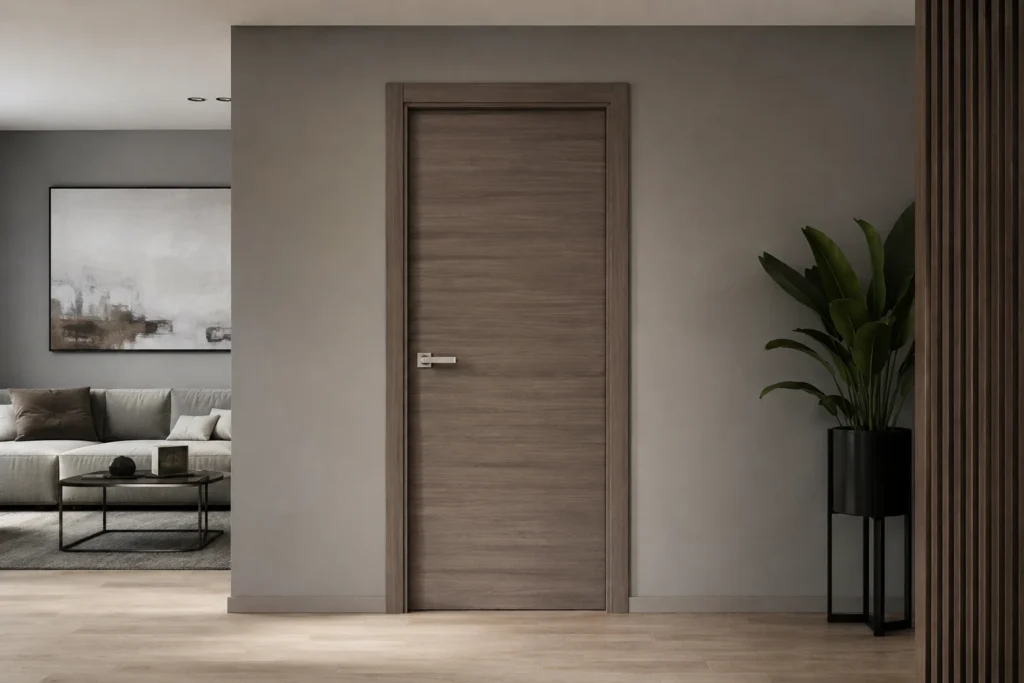

Noise has become one of the biggest challenges in modern homes. Open floor plans, hard flooring, home offices, children’s rooms, and entertainment spaces all contribute to sound traveling throughout the house. While many homeowners focus on insulating walls or replacing windows, interior doors are often the weakest point in a room’s acoustic performance. Even an excellent wall can lose much of its sound-blocking ability if the door allows noise to pass through gaps or lightweight construction. Research consistently shows that door mass, sealing quality, and installation accuracy determine how effectively sound is reduced.
Why some interior doors block sound better than others
Many people assume all interior doors perform similarly because they look almost identical from the outside. In reality, what matters most is hidden inside the door.
The first factor is mass. Dense materials naturally resist airborne sound more effectively than lightweight structures. The second factor is airtightness. Sound behaves much like air, meaning even tiny gaps around the frame can significantly reduce overall performance. Finally, the quality of installation determines whether the door performs as intended.
A premium solid-core door without proper seals may perform worse than an average solid-core door installed with high-quality acoustic weatherstripping.
This is why professionals evaluate the entire door system rather than the slab alone.
The best interior door types for noise reduction
When comparing interior doors, several construction methods stand out.
- Solid-core doors These are widely considered the best balance between acoustic performance, durability, appearance, and cost. Instead of a hollow cardboard honeycomb interior, the core is filled with dense engineered wood, MDF, or composite materials. Their additional weight significantly reduces airborne sound.
- Solid wood doors Genuine hardwood doors also provide excellent sound insulation because of their density. They are durable and attractive but usually cost considerably more than engineered solid-core alternatives while offering only a moderate improvement in residential settings.
- Acoustic-rated doors Designed specifically for sound control, these doors include specialized cores, acoustic seals, reinforced frames, and automatic door bottoms. They are common in studios, offices, conference rooms, and luxury homes where maximum privacy is required.
Research shows that hollow-core doors generally provide the lowest level of sound isolation, while solid-core doors offer one of the greatest improvements available without major structural remodeling.
Comparing common interior door types
| Door Type | Noise Reduction | Durability | Cost | Best Application |
|---|---|---|---|---|
| Hollow-core | Low | Moderate | Low | Closets, utility rooms |
| Solid-core MDF | High | High | Medium | Bedrooms, offices, family rooms |
| Solid wood | High | Excellent | High | Premium residential interiors |
| Acoustic-rated | Excellent | Excellent | Premium | Recording studios, home theaters, executive offices |
Although acoustic-rated doors deliver the highest performance, most homeowners achieve outstanding results with quality solid-core doors combined with proper sealing.
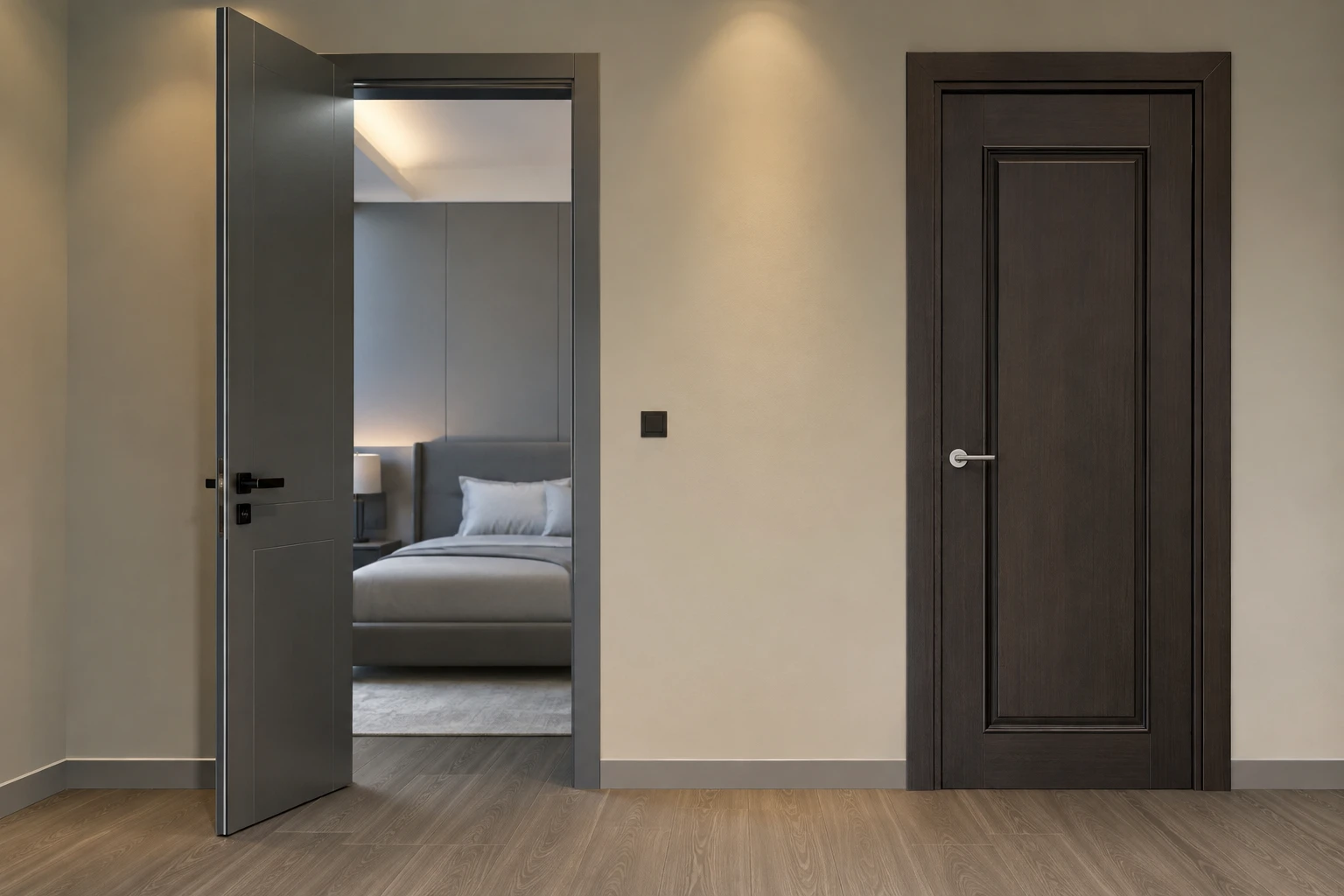
Understanding STC ratings
When shopping for sound-insulating doors, you’ll often encounter the term STC, or Sound Transmission Class.
Rather than focusing on marketing descriptions, STC provides an objective measurement of how much airborne noise a door can block.
A simplified guideline looks like this:
- STC 20 to 25 allows normal conversations to be heard clearly.
- STC 30 to 35 noticeably reduces speech and improves privacy.
- STC 40 to 45 delivers excellent residential sound isolation.
- STC 50 and above approaches professional acoustic performance.
For most homes, increasing door performance from roughly STC 20 to above STC 30 creates one of the most noticeable improvements in everyday acoustic comfort.
This explains why replacing a hollow-core door with a properly sealed solid-core model often transforms bedrooms, nurseries, and home offices.
Door thickness also matters
Another factor frequently overlooked is thickness.
Standard interior doors are commonly around 1⅜ inches thick. Heavier 1¾-inch doors generally provide better acoustic performance because additional material increases mass.
However, thicker doors require compatible hinges, frames, and hardware. Simply installing a thicker slab into an existing frame without proper adjustments rarely produces optimal results.
If you’re planning to improve privacy and reduce noise inside your home, choosing the right interior doors is one of the smartest investments you can make. Explore premium interior door collections and modern design ideas at https://indigodoors.com/, where you’ll find stylish solutions for every room. The right door not only enhances your interior but also creates a quieter, more comfortable living environment.
Professional installers evaluate the complete assembly, ensuring the frame supports the additional weight while maintaining a tight seal around the perimeter.
Glass inserts and their effect on sound
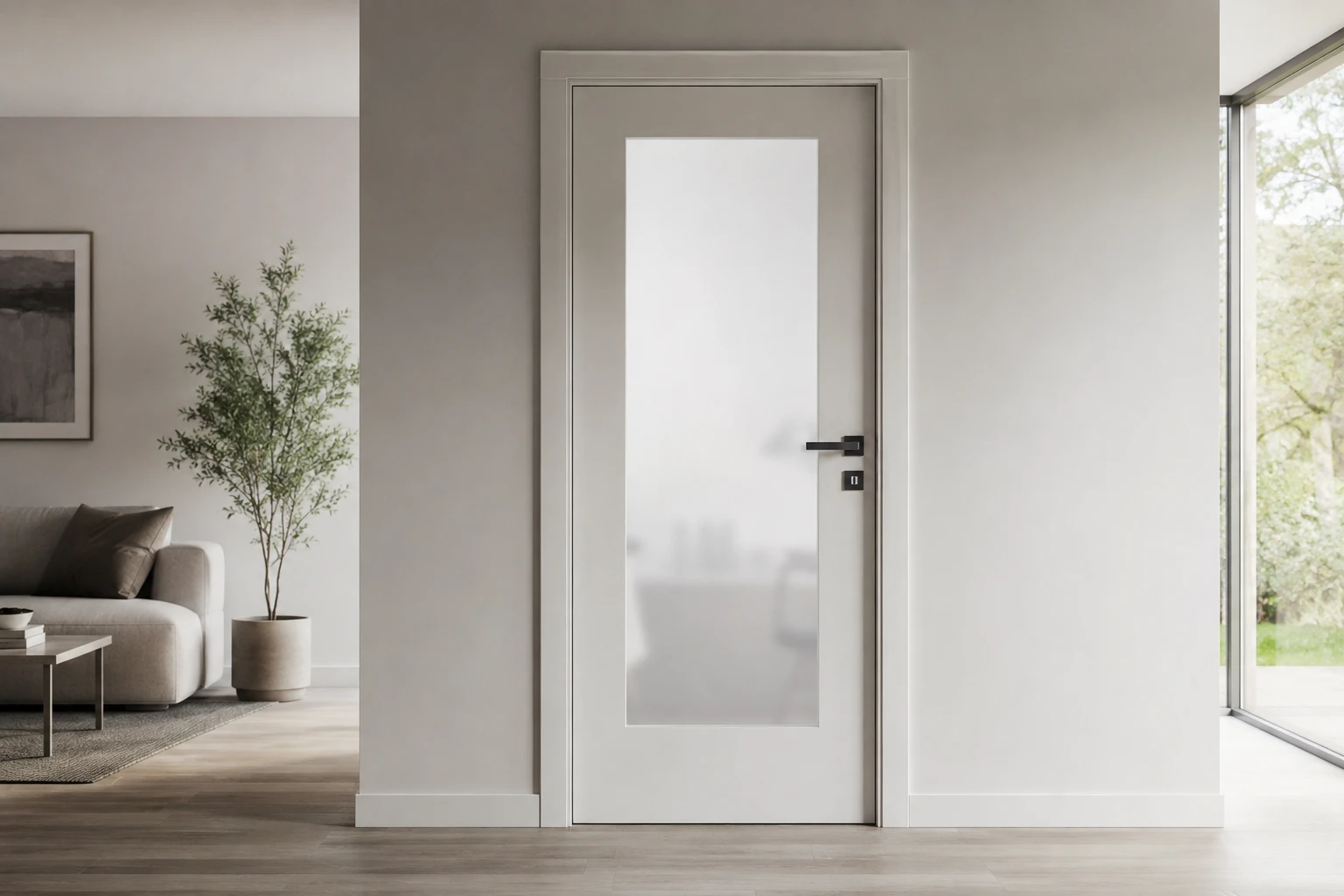
Glass doors remain extremely popular because they brighten interiors and create a more spacious appearance. Unfortunately, glass usually reduces acoustic performance compared with an equally thick solid panel.
Several factors influence performance:
- Full-glass doors transmit the most sound.
- Small decorative glass inserts have only a moderate impact.
- Laminated acoustic glass performs substantially better than standard glass.
- Double-glazed acoustic panels provide improved privacy but increase cost.
If maximum sound isolation is your priority, fully solid doors remain the strongest option.
The importance of sealing the gaps
Many homeowners replace a hollow-core door with a heavy solid-core model yet remain disappointed by the results.
The reason is simple.
Most sound leaks around the door rather than directly through it.
Even a small gap beneath the door can dramatically reduce overall acoustic performance because sound always follows the easiest available path.
The following improvements usually produce significant benefits:
- Install quality perimeter weatherstripping.
- Add an automatic door bottom or acoustic sweep.
- Ensure the latch pulls the door tightly against the seals.
- Correct frame alignment if gaps are uneven.
- Seal any visible openings between the frame and the surrounding wall.
Experts consistently emphasize that sealing air leaks is just as important as selecting a heavier door.
Which rooms benefit the most?
Not every room requires maximum sound insulation.
Bedrooms benefit greatly because reduced noise improves sleep quality and privacy.
Home offices have become increasingly important as remote work continues to grow. Better acoustic separation makes video meetings more professional while reducing distractions from family activities.
Nurseries also benefit significantly since lighter sleep is often interrupted by everyday household sounds.
Media rooms, music rooms, and gaming spaces gain improved sound containment, reducing disturbance for the rest of the household.
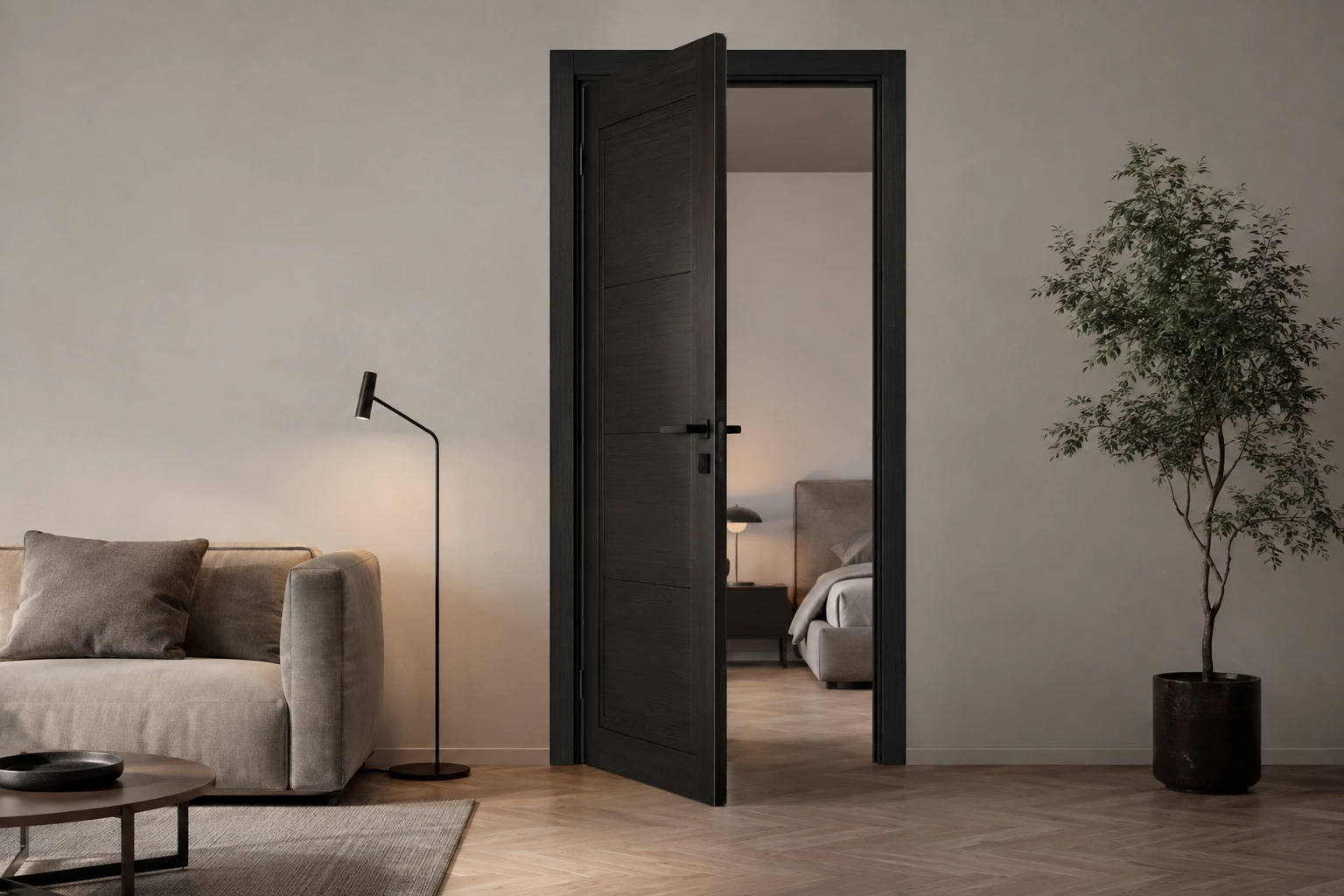
Bathrooms can also feel noticeably more private with better acoustic doors, especially in shared family homes.
Common mistakes homeowners make
Many disappointing results come from simple purchasing decisions rather than poor products.
- Choosing lightweight hollow-core doors because they look identical to solid-core versions.
- Ignoring the bottom gap beneath the door.
- Assuming expensive decorative hardware improves acoustic performance.
- Installing glass doors where privacy is important.
- Focusing only on the door while ignoring wall construction.
- Purchasing premium doors but reusing warped or poorly aligned frames.
Each of these mistakes can significantly reduce the effectiveness of an otherwise high-quality installation.
My professional assessment
After reviewing manufacturer specifications, acoustic guidelines, and practical installation recommendations, one conclusion becomes clear.
For the overwhelming majority of homeowners, a high-quality solid-core MDF or engineered wood interior door offers the best combination of sound reduction, durability, appearance, and value. Premium acoustic doors certainly outperform residential models, but their additional cost is often unnecessary unless you are building a home theater, music studio, or professional workspace.
Equally important, spending part of the budget on professional installation and acoustic seals usually delivers greater real-world improvements than purchasing a more expensive door slab alone.
If your goal is a quieter bedroom, a more productive home office, or increased privacy throughout the house, investing in properly installed solid-core doors with effective perimeter sealing is one of the highest-value upgrades available. Research consistently supports this approach, and real-world experience confirms that the combination of mass, airtight sealing, and precise installation produces the greatest improvement in everyday acoustic comfort.
